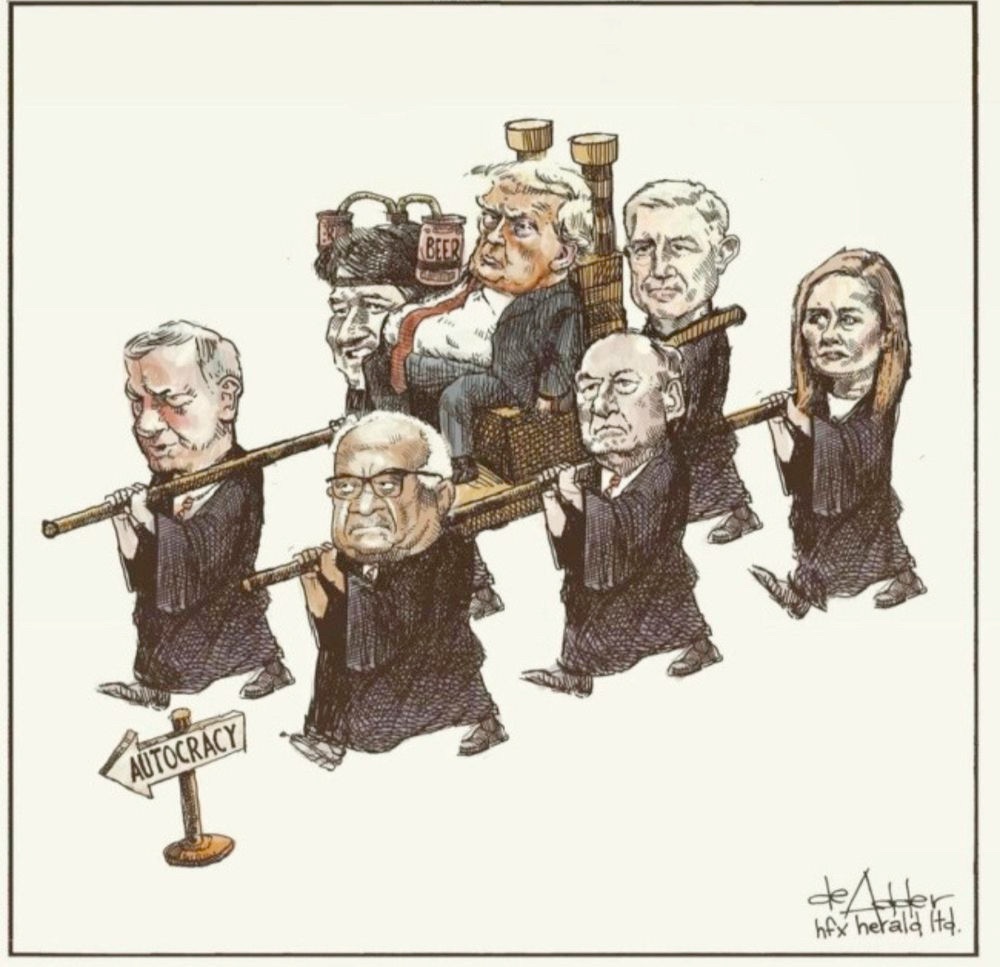
www.theguardian.com/commentisfree/2026/jan/07/the-trump-doctrine-exposes-the-us-as-a-mafia-state
-
www.nytimes.com/2026/01/06/world/americas/cuba-economy-venezuela-oil.html
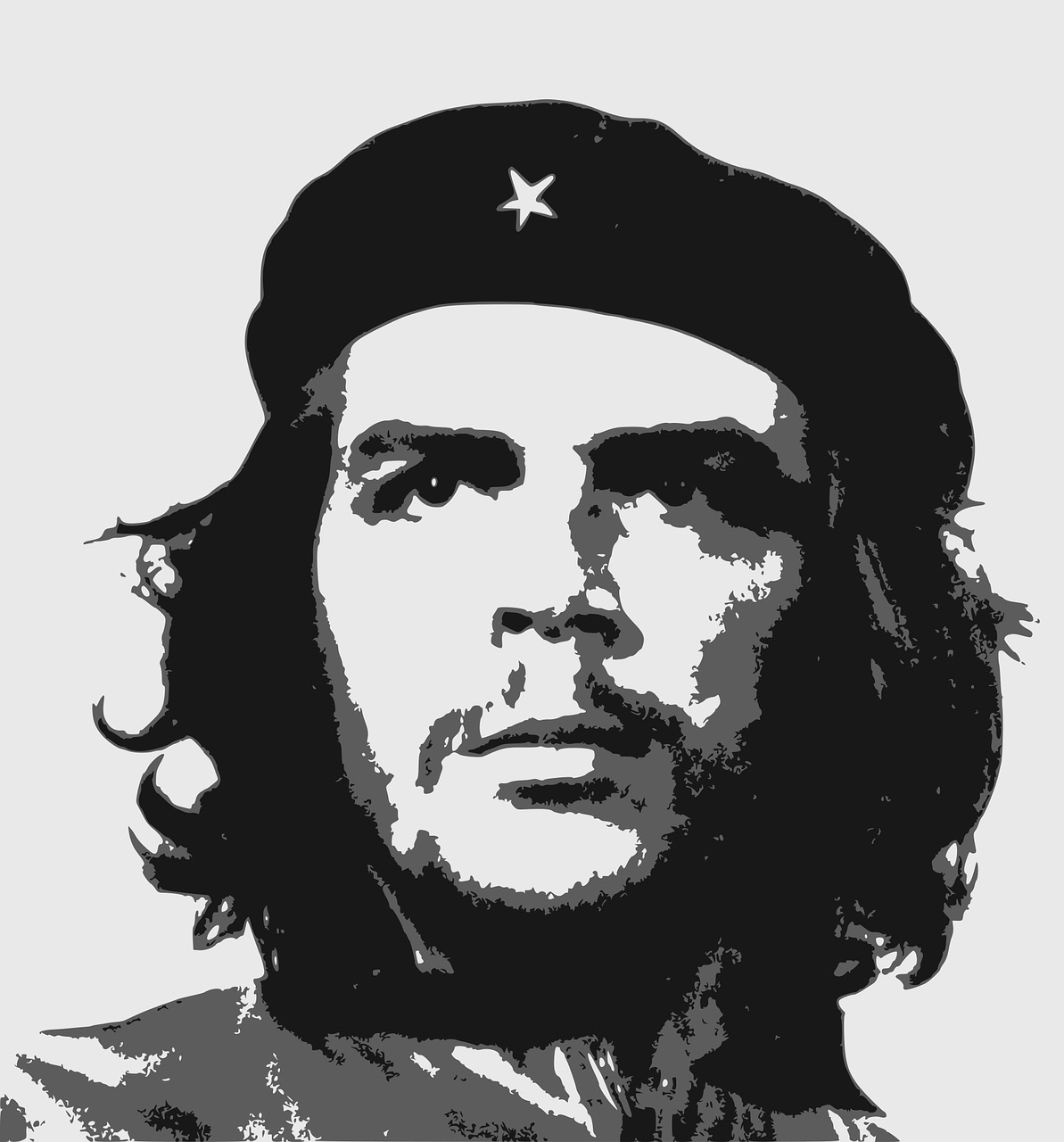
By all accounts, Cuba is enduring the worst economic moment in the 67-year history of its communist revolution.
While the island nation has endured periodic episodes of mass migration, food shortages and social unrest in decades past, never before have Cubans experienced such a wholesale collapse of the social safety net that the country’s leaders — starting with Fidel Castro — once prided themselves on.
“I, who was born there, I, who lives there, and I’ll tell you: It’s never been as bad as it is now, because many factors have come together,” said Omar Everleny Pérez, 64, an economist in Havana.
As Trump administration officials congratulate themselves on a triumphant military victory in Venezuela, in which President Nicolás Maduro was seized and the United States claimed control over the South American country, eyes have now turned to Cuba, which enjoyed a warm relationship with the jailed president and which depended on the oil he sent.
To buy gasoline, people have to use an app to sign up for an appointment — at least three weeks in advance. One resident of Havana, the capital, said he joined the queue three months ago, and is now No. 5,052 in line.
The lack of gasoline has led to sporadic trash pickup, which has led to outbreaks of mosquito-borne illnesses like dengue and chikungunya. Medicines are nearly impossible to find without relatives abroad to send them.
The Cuban government has consistently blamed its economic travails on a decades-long U.S. trade embargo that it claims puts a chokehold on its ability to do business in the world market and earn much-needed cash. Economic sanctions by Republican administrations, which have excluded food and medicine, have made it even harder, government officials say.
“Correcting distortions and reviving the economy is not a slogan,” President Miguel Diaz-Canel said in a speech last month. “It is a concrete battle for stability in everyday life, so that wages are sufficient, so that there is food on the table, so that blackouts end, so that transportation is revived, so that schools, hospitals and basic services function with the quality we deserve.”
The resulting power outages have hurt industries like nickel production, because the factories are off when there’s no power.
Another crucial industry, tourism, has also suffered in recent years. Before the Covid pandemic, four million people a year used to visit Cuba; that number has struggled to get back to two million, economists said.
Experts agree that while U.S. policies have hurt Cuba, poor planning and mismanagement are also to blame for the country’s economic troubles. Efforts to allow private businesses to operate have faltered because of onerous regulations.
The private enterprises, known as MiPyMEs, were legalized in 2021 and have been a lifeline in Cuba, Mr. Pérez and other residents said.
Some private stores resemble supermarket chains in the United States, with everything from Goya brands to Philadelphia cream cheese.
But prices at the private stores are exorbitant, particularly for people who earn salaries in the local currency. A typical monthly pension is 3,000 pesos, less than $7, while a carton of 30 eggs costs 3,600 pesos — $8.
Difficult living conditions helped spur spontaneous mass protests in 2021, but a harsh government crackdown quashed the demonstrations.
Cuba’s financial collapse has fueled an extraordinary exodus — about 2.75 million Cubans have left the country since 2020, according to Juan Carlos Albizu-Campos, a Cuban demographer. While the official population is about 9.7 million people, Mr. Albizu-Campos said 8.25 million would be more accurate.
-
Morning

Morning to everyone except Republicans or Republican enablers. 
-
TRUMP IS ROBBING US BLIND.
Funding Freeze: The Trump administration plans to freeze $10 billion in funding for child care subsidies, social services and cash support for low-income families in five states controlled by Democrats, claiming widespread fraud throughout those states, without citing evidence, after a major welfare fraud scheme in one of them. Nyt -
THEY DON’T GO INTO POLITICS AND BECOME CORRUPT, THEY GO INTO POLITICS BECAUSE THEY ARE CORRUPT.
New Year’s Day, Thursday 1 January 2026
Audio diary kept by Hanya Aljamal, a 28-year-old Palestinian living in Gaza. She, her parents, and five siblings share a tiny apartment. Their home in southern Gaza was destroyed.
“Foreign journalists…are banned by Israel from reporting freely from Gaza.”
After they found out that their childhood home had been destroyed…“..it took my dad and my mom almost a couple of weeks at least to stop with the incessant crying.”
“…we’ve been hearing endless strings of explosions for the past 48 hours.”
“No one, no one is taking real steps to end it.”
“It’s really hard to have faith in humanity. It’s getting really, really, hard.”
“We are terrified, me and my family. We already lost almost everything we own.”
“…we would probably be fully homeless once this is over, if this is ever over, which is seeming less likely every day now.”
From her balcony, she watched one of her neighbors, an old man, growing plants in his tiny garden. Hanya described it as “the purest form of resistance.”
“…I don’t know,” she said once. “Maybe there’s hope.”
“I almost lost my mind.”
“How much is enough?”
“This is how the world sees us, the way the world would always see us. Replaceable. Collateral damage. And it breaks my heart.”
“I am more terrified of grief than I am of death of losing them, being lost.”
“The old man…cultivating in his tiny garden had to dig up most of the vegetation…”
“I miss not feeling fundamentally broken, and unreal.”
“I struggle to feel any genuine hopefulness about not just Gaza but the general state of the world.”
Recommended Reading
Bamio, Lazaro and Amy Schoenfeld Walker (12/31/26) “Trump’s Tangled Web…” New York Times. Donald Trump is amassing an increasingly impressive fortune for himself and his family using the federal government as his instrument. So, the government is not just a way of keeping himself from being prosecuted, but a way of arranging deals and scams and payoffs. There has never been a more scandal ridden administration in the history of the country. It is a dismal way of starting the new world.
I used to tell my students that men didn’t go into politics and then become corrupt. They went into politics because they were corrupt. And here we are. As Hanya said: “No one, no one is taking real steps to end it.”

-
-
www.nytimes.com/2025/12/29/world/middleeast/israel-benjamin-netanyahu-decisions.html
Mr. Netanyahu’s criminal trial on charges of bribery and fraud is inexorably advancing. President Trump’s peace plan for Gaza is inching along toward a difficult Phase 2, and tensions are building with the White House over Israel’s actions in Syria and Lebanon. And polls indicate Mr. Netanyahu is headed to defeat in next year’s elections.
the Israeli right, Mr. Netanyahu’s political base, which is agitating for him to pursue annexation of the Israeli-occupied West Bank despite Mr. Trump’s warnings that doing so would trigger a harsh U.S. response.
If he wants to maintain his decades-old political alliance with Israel’s ultra-Orthodox Jewish community, one of Mr. Netanyahu’s first tasks is to try to meet its demand for a law granting yeshiva students a new exemption from the draft, after an old exemption expired and the Supreme Court ruled in 2024 that they were legally obligated to serve.
A new exemption would be wildly unpopular with the vast majority of Israelis, who have been exhausted by the Gaza war’s demands on conscripts and reservists alike over the past two years.
Those opposing the exemption include members of Mr. Netanyahu’s own Likud party.
If Parliament does not enact the exemption, his government could collapse, precipitating elections early next year.
Yohanan Plesner, president of the Israel Democracy Institute, said he believed Mr. Netanyahu wanted time for the Israeli public to vent its rage over a new ultra-Orthodox draft exemption but then also to get over it, and for the discussion to shift to other topics.
“It’s difficult,” Mr. Plesner said. “But if Netanyahu decides that the coalition needs to pass it, it will probably pass.”
But Mr. Netanyahu is counting on the ultra-Orthodox and the extreme-right parties to back his efforts to overhaul the judicial system to curb the power of the courts — something that opponents say would give Parliament far too much unchecked power and allow Mr. Netanyahu to legislate himself out of legal jeopardy.
-
-
www.nytimes.com/interactive/2025/12/22/us/politics/trump-donors-fundraising-benefits.html
The president’s team has created a highly unusual fund-raising apparatus for causes he favors. The Times analyzed more than half a billion dollars in contributions from 346 donors. Some have received pardons, jobs, access to the president and other valuable gains.
Since President Trump was elected a second time, he and his allies have raised nearly $2 billion for his favored political causes and passion projects. That total, which was confirmed by four people involved in the fund-raising, likely eclipses the amount raised to support his 2024 campaign.
The astounding haul hints at a level of transactionalism for which it is difficult to find obvious comparisons in modern American history. The identities of the donors behind much of the cash are not legally required to be, and have not been, publicly disclosed. In some cases, Mr. Trump’s team has offered donors anonymity.
To shed light on what has been a largely opaque fund-raising apparatus, The New York Times conducted a comprehensive investigation. It relied on previously unreported documents and public campaign finance filings, as well as interviews with dozens of people who are familiar with the solicitations or are involved in the fund-raising. It traced a large portion of the funds raised — more than half a billion dollars’ worth — back to 346 donors who each gave at least $250,000. It also found that more than half of them have benefited, or are involved in an industry that has benefited, from the actions or statements of Mr. Trump, the White House or federal agencies.
It is not possible to prove that any of the donations directly led to favorable treatment from the Trump administration. And the contributions do not personally enrich Mr. Trump, unlike some of his family’s cryptocurrency ventures.
But many of the deep-pocketed individuals and corporations who have given large sums have a lot riding on the administration’s actions, raising questions about conflicts of interest.
One $2.5 million contribution to MAGA Inc. was given by a South Florida woman whose father months later received an unusually lenient dealfrom top Justice Department officials to settle charges that he bribed Puerto Rico’s then-governor in 2020.
Another $2.5 million pledged donation — this one to Mr. Trump’s White House ballroom project — came from Parsons Corporation, an engineering firm that has won government contracts for years, including under Mr. Trump, and is jockeying for some of the more than $1 trillion in contracts that could be awarded to build a missile defense system proposed by the president called the “Golden Dome.” Also giving $2.5 million to the ballroom project was the chief executive of Roblox, a popular online video game company that has applauded a Trump executive order and other initiatives involving children’s use of artificial intelligence.
A couple who donated $1 million to Mr. Trump’s inaugural committee and $500,000 to MAGA Inc., as well as an undisclosed amount to the ballroom fund, saw Mr. Trump nominate their son to be U.S. ambassador to Finland.
And a company that was accused last year by the Justice Department of colluding over ticket pricesdonated $250,000 to Mr. Trump’s inauguration. The president pardoned the company’s co-founder in a separate case this month.
In other cases, The Times was able to quantify large donations for which the amounts were previously unknown. Those included gifts from the technology firm Palantir, which donated $10 million to the ballroom project and $5 million to America250. Additionally, the Palantir co-founder Alex Karp donated $1 million each to the inauguration and to MAGA Inc. In Mr. Trump’s second term, Palantir has secured federal contracts worth hundreds of millions of dollars, including to develop software to help Immigration and Customs Enforcement deport people. But a Palantir official said in a previously unpublished response to an inquiry from Senator Richard Blumenthal, Democrat of Connecticut, that the company did not seek and was not offered any special consideration for its donation to the ballroom project.
While a foundation funded by Miriam Adelson, a casino magnate, mostly supports Jewish and Israeli causes, it pledged to donate $25 million to the ballroom project, according to two people familiar with the donation. In a speech at a White House Hanukkah party last week, Mr. Trump praised Dr. Adelson, a physician by training, for donating tens of millions of dollars to help his campaigns and using her access to lobby for greater U.S. backing for Israel. Calling her to the lectern, Mr. Trump said, “When somebody can give you $250 million, I think that we should give her the opportunity to say hello.” The two embraced and bantered about how Dr. Adelson would be willing to donate $250 million more to help Mr. Trump seek an unconstitutional third term.
Extremity Care, a company that makes a pricey form of bandages known as skin substitutes, donated $5 million to MAGA Inc. An executive from the company then attended a donor dinner in March at Mar-a-Lago where he lobbied Mr. Trump, whose administration announced the next month that it would delay a Biden-era plan to limit Medicare’s coverage of the bandages. Extremity Care or one of its affiliates subsequently donated $2.5 million to the ballroom.
And Mr. Trump has entered into deals with a number of drug makers, including several that donated to groups he supports, to lower prices in exchange for avoiding punitive measures including threatened tariffs.
In two instances, Mr. Trump pardoned people whose companies or families made donations.
In January, amid scrutiny from the Justice Department’s antitrust division, which had identified — but not charged — the venue management company Oak View Group in a lawsuit against Ticketmaster’s parent company, Oak View donated $250,000 to Mr. Trump’s inauguration.
The donation did not eliminate legal exposure for Oak View’s co-founder and then-chief executive, Timothy J. Leiweke. Months later, the antitrust division charged him in an unrelated case. He stepped down as head of Oak View, and the company agreed to pay $15 million in penalties. Mr. Leiweke pleaded not guilty. But this month, before the case went to trial, Mr. Trump pardoned him.
David B. Gerger, a lawyer for Mr. Leiweke, rejected a question about whether the donation was intended to avoid legal trouble.
“Any such innuendo — whether coming from ill will or just ignorance — is false,” he said in a statement.
In another case, the former health care entrepreneur Elizabeth Fago, after donating $1 million to MAGA Inc., attended a donor dinner with the president. Mr. Trump pardoned her son, Paul Walczak, less than three weeks later, sparing him from having to pay nearly $4.4 million in restitution and from reporting to prison for an 18-month sentence for employment tax crimes.
Another donor with an interest in the outcome of a criminal case was Isabela Herrera, who donated $2.5 million to MAGA Inc. late last year. At the time, her father, Julio Herrera Velutini, a Venezuelan-Italian banker, was being prosecuted by the Justice Department for trying to bribe the governor of Puerto Rico.
Mr. Herrera hired a former personal lawyer for Mr. Trump, who alleged that the case was an example of the political weaponization of the criminal justice system. Top Justice Department officials appeared to agree, authorizing a misdemeanor plea deal to settle the case and overruling career prosecutors who had pushed for a harsher sentence.
Mr. Herrera could still face a year in prison at sentencing, which is scheduled for next month.
Ms. Herrera and a lawyer for Mr. Herrera declined to comment.
A Justice Department spokeswoman said “the decision to settle this case was made through the proper channels and was not influenced by any donation to MAGA Inc.”
But John D. Keller, who oversaw the Justice Department division that handled the case, said in an interview that the difference between the deal and the more than 20 years Mr. Herrera could have faced if convicted of the original charges was “striking.” Mr. Keller, who resigned in protest when he was directed by Mr. Trump’s appointees to drop another politically fraught prosecution, said the Herrera case “appears to be another example of political considerations dictating the outcome in an individual criminal case.”
A broader relaxation of federal scrutiny has benefited cryptocurrency companies and other corporate interests that have showered donations on Mr. Trump’s groups.
The Securities and Exchange Commission largely abandoned its hard-line approach to crypto trading platforms, ending lawsuits against Coinbase, Kraken and Ripple after the companies each donated $1 million or more to Mr. Trump’s inaugural committee, and ending an investigation into Robinhood after it donated $2 million to the committee. Coinbase and Ripple also donated to the ballroom, while Coinbase gave to America250.
A spokesman for the S.E.C. said that “politics have had nothing to do with S.E.C. actions” on the cases. “Decisions on these cases turn on long held publicly expressed legal and policy views,” he added.
Donors